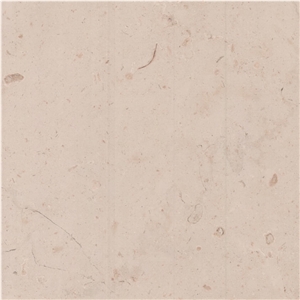
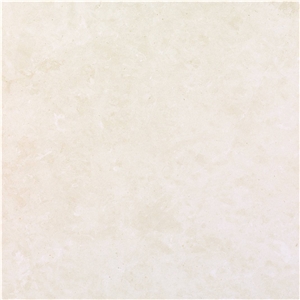
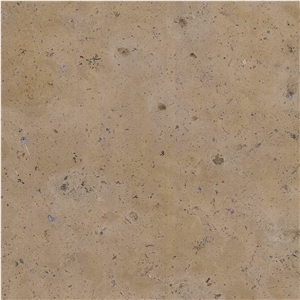
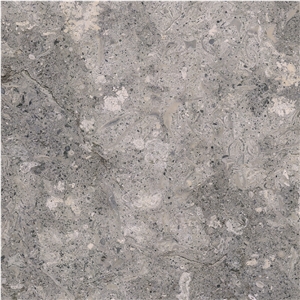
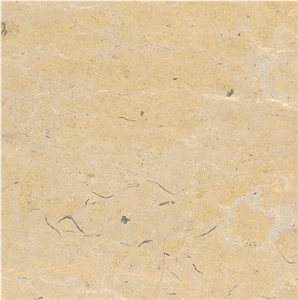
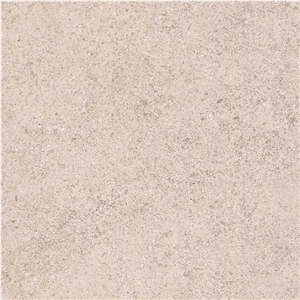
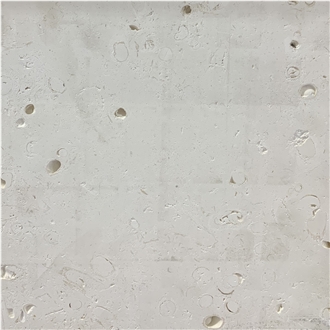
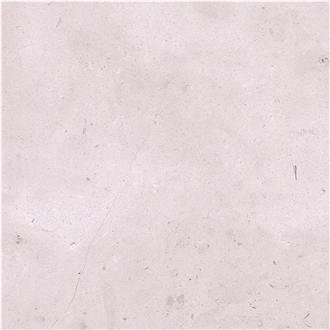
Quarried in Havre Saint-Pierre, Quebec, Canada, St. Pierre Limestone is a high-quality, hard limestone with both visual appeal and technical durability. It’s ideal for contemporary and traditional architectural applications due to its elegant appearance and robust structure.
Appearance, Texture & Pattern
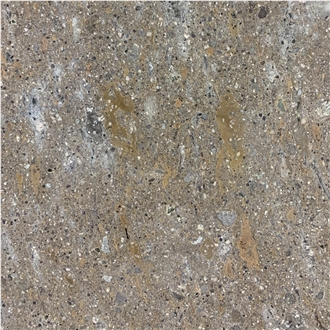
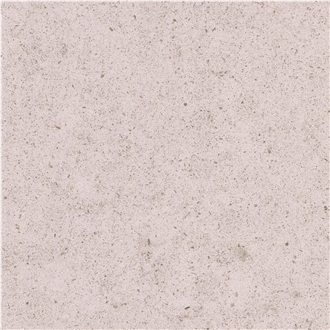
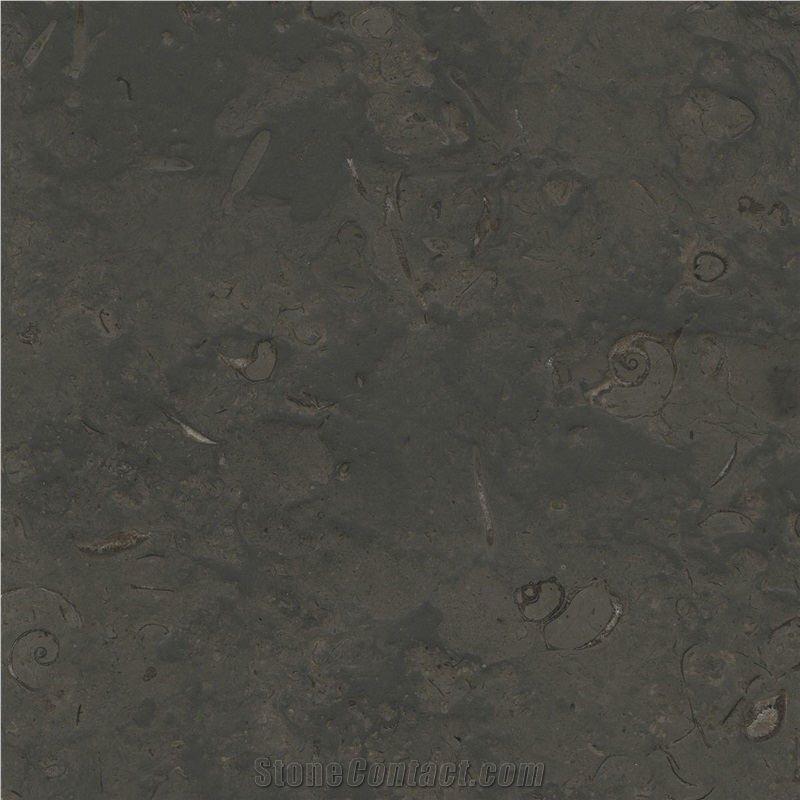
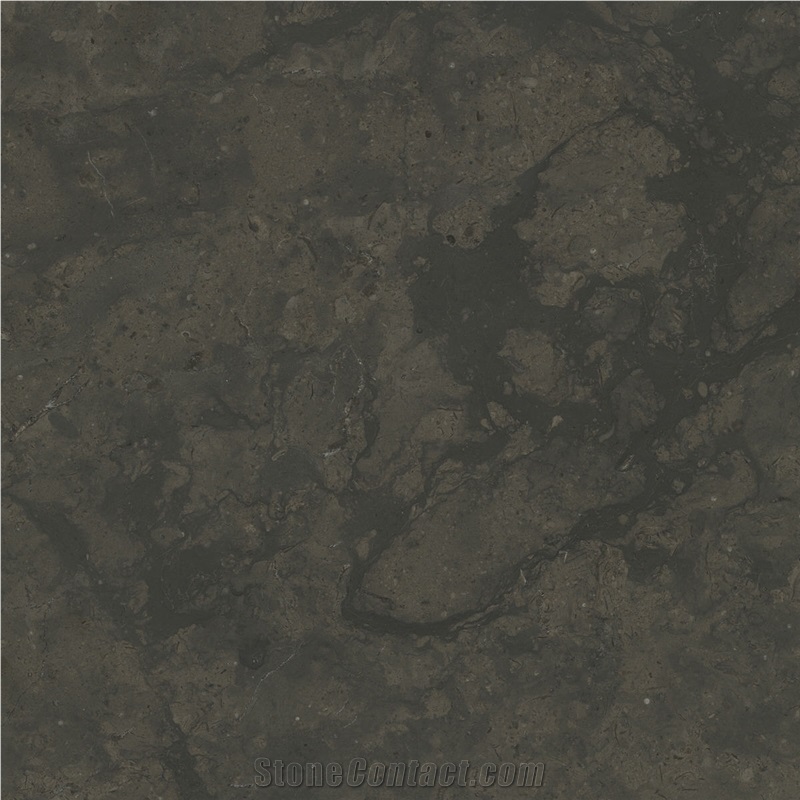
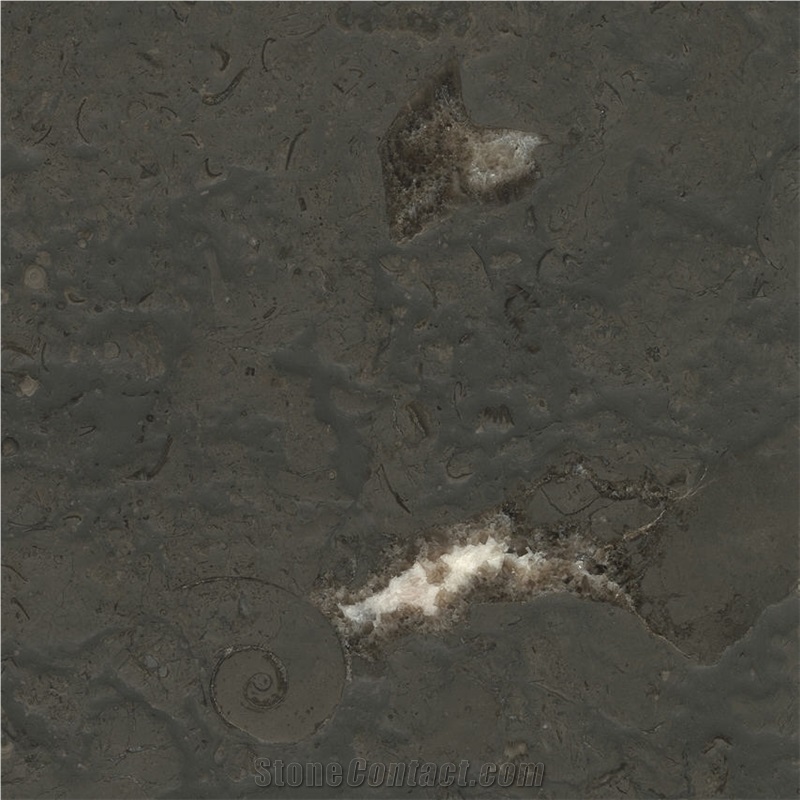
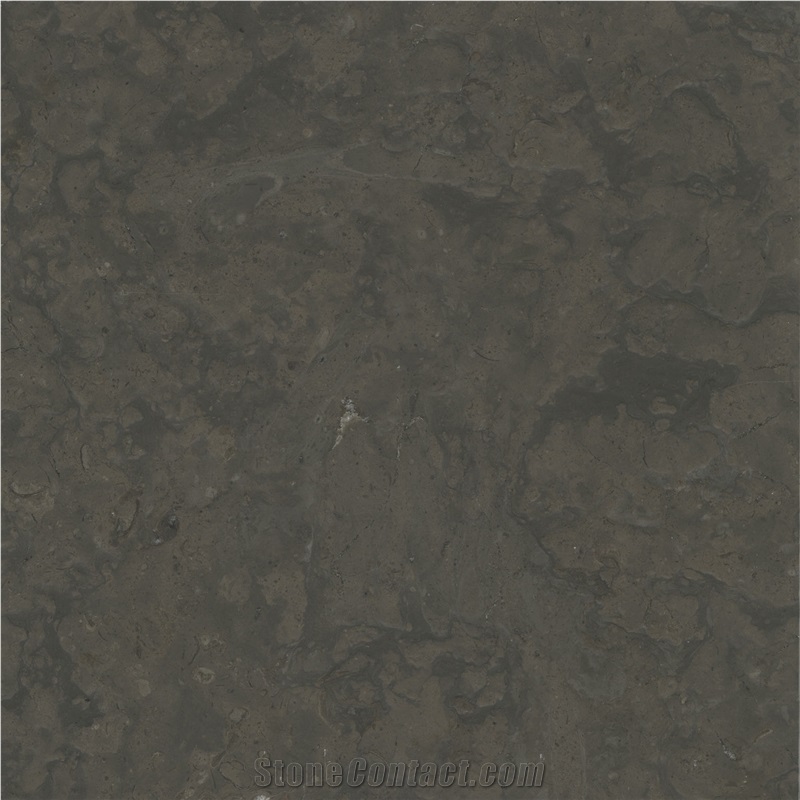
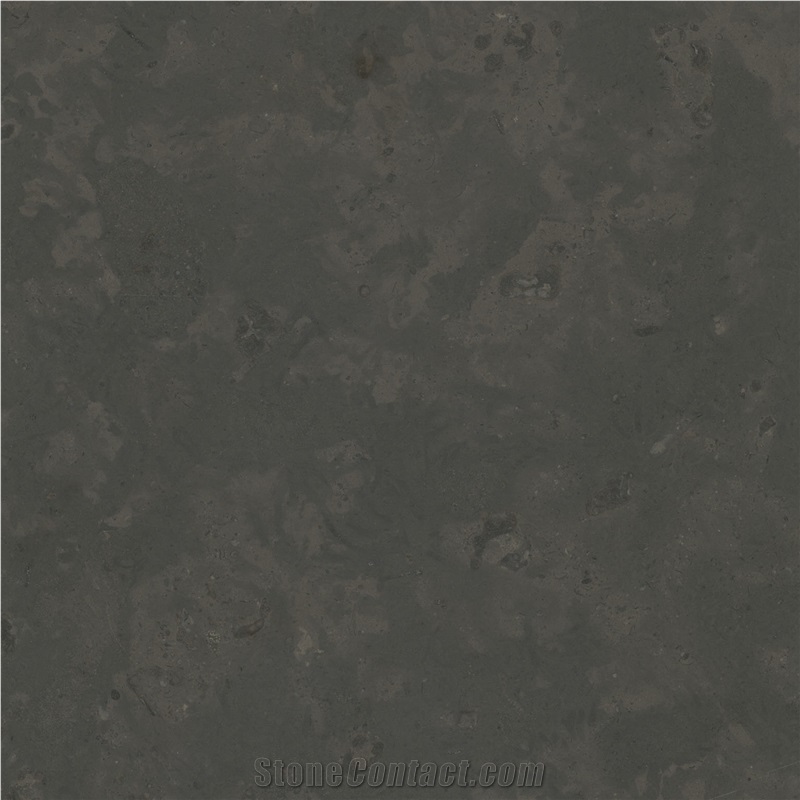
- Color Tones: Neutral chocolate-brown base tones blended with swirling charcoal-grey veining.
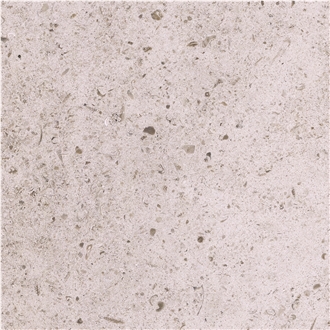
- Pattern: Natural vein patterns float across the surface, creating a sense of movement. Occasional fossil and shell inclusions from marine origins contribute to its organic beauty.
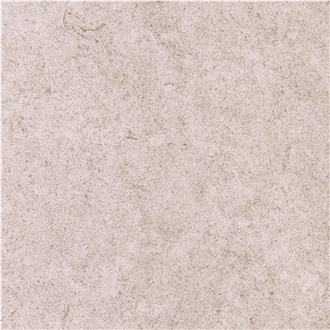
- Texture: Fine-grained, compact, and smooth when honed or polished Subtle natural texture with fossilized elements visible in some cuts
- Cut Options: Linear (Vein Cut): Accentuates the horizontal veining for a modern, structured look
- Fleuri (Cross Cut): Produces a more randomized and open pattern for a natural appearance
Physical & Mechanical Properties
- Water Absorption .... 0.14% by weight
- Density .... 2708 kg/m³ (2.708 g/cm³)
- Flexural Strength .... 11.9 MPa
- Compressive Strength .... 136.3 MPa
- Porosity .... Low (<2%)
- Hardness (Mohs) .... 3 – 4
- Slip Resistance .... R9–R10 (depending on finish)
Chemical & Mineral Composition (% by weight)
Typical for marine limestones:
- CaCO3 (Calcium Carbonate) .... 90–95%
- MgCO3 (Magnesium Carbonate) .... 1–3%
- SiO2 (Silica) .... 1–2%
- Fe2O3 (Iron Oxide) .... <1%
- Al2O3 (Aluminum Oxide) .... <0.5%
- Others (organics, trace elements) .... <2%
Usage & Applications
- Interior Flooring & Wall Cladding
- Feature Walls & Fireplaces
- Bathroom Vanities & Shower Surrounds
- Kitchen Countertops (sealed)
- Staircases, Thresholds, and Window Sills
- Exterior Cladding and Facades (when sealed and finished appropriately)
Finishing Options
- Honed .... Smooth matte, emphasizes color and fossil detail
- Polished .... Glossy, refined surface, luxurious feel
- Brushed .... Soft texture, aged appearance
- Sandblasted .... Subtly rough, suitable for exteriors
- Bush-hammered .... Rugged, anti-slip surface
- Tumbled .... Worn, antique style often used for tiling
Cutting Sizes (cm)
Slabs:
- 2 cm and 3 cm thick
- Typical dimensions: 240–300 cm x 120–150 cm
Tiles:
- Standard sizes: 30×30, 30×60, 40×40, 60×60, 40×80
- Custom sizes and cut-to-size available for project specifications
Maintenance & Care
- Sealing recommended, particularly in wet areas or high-traffic installations
- Clean using pH-neutral stone cleaners
- Avoid acidic or abrasive substances
- Periodic resealing (every 1–2 years) helps preserve surface and color
- Low porosity and hardness contribute to easy maintenance
Summary
St. Pierre Limestone combines refined aesthetics with strong mechanical performance. Its distinctive chocolate and charcoal tones, marine inclusions, and versatility in both vein and cross cuts make it a popular choice for architects and designers seeking durability with visual sophistication. Suitable for both residential and commercial applications, this Canadian limestone lends an urban luxury character to interiors and exteriors alike.


 Canada