


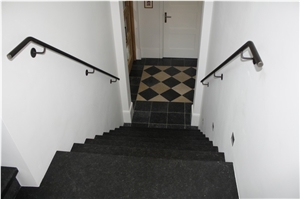
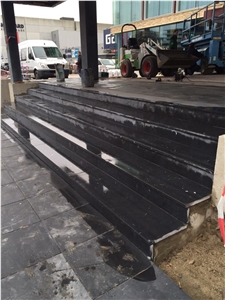
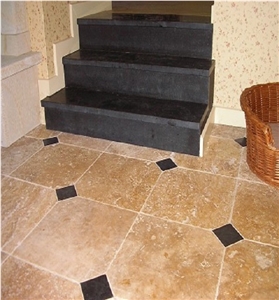
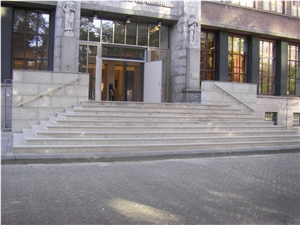
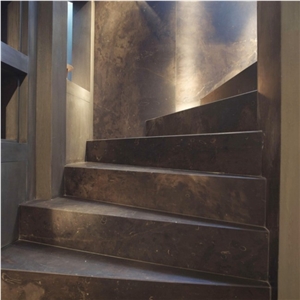
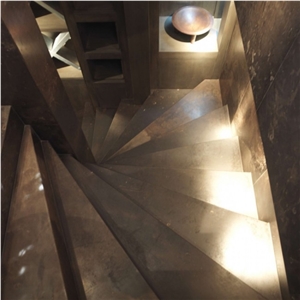
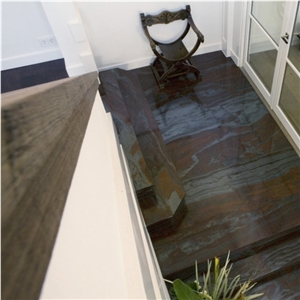
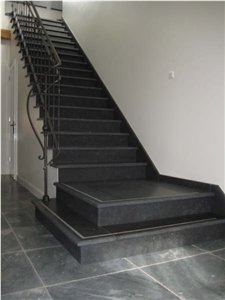
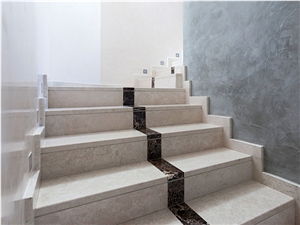
Black Basalt Staircase
Barens Natuursteen BV Netherlands
Netherlands Netherlands 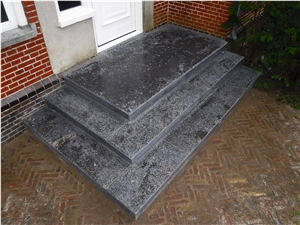
 Netherlands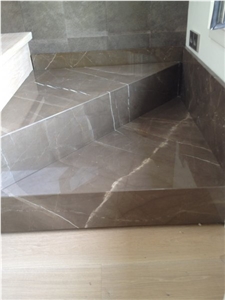
 Netherlands Netherlands
 Could not find the answer you need? Ask about Stone Steps.
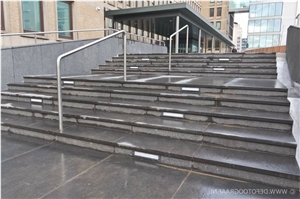
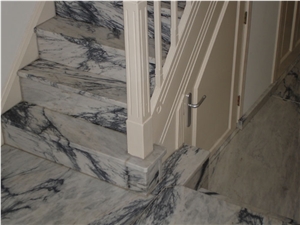
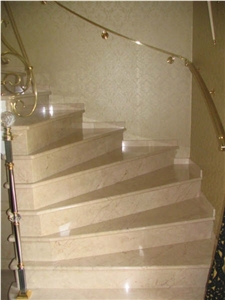
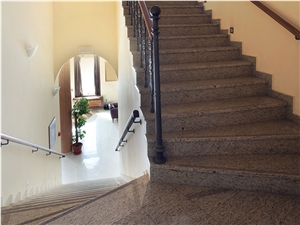
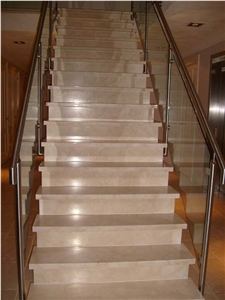
Marble and granite are commonly used stones for a staircase. It's a bit about what kind of building you're going to use it in. Marble is generally preferred in homes because of its impressive appearance. For homes with marble flowing, the marble staircase is a preferred choice and obvious choice. Granite is preferred because of its durability in buildings such as schools, hospitals and offices that people use constantly. Natural Stone is a better option for stairs in the entryway or garden area.
Keep step stones depth between 12”(30cm) and 18”(45cm). Choose stones between 6” (15cm) and 7”(18cm) thick for ideal rise. Plan to make the bottom step wider than the others.
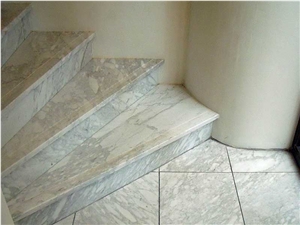
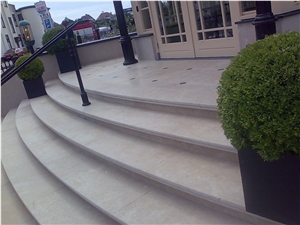
The bulnose step has a radius to one corner and is used to create a feature at the bottom of the stairs. Right hand bulnose (RH) – the bulnose will curve on your right as you look up the stairs.
Bluestone slab prices are around $15 to $30 per linear foot, with an added labor cost of between $500 to $1,200. On average, it'll cost you between $900 and $2,000 for a standard bluestone step staircase with installation.
Yes, sure it is. Granite is a perfect material for those looking for a special cover for the staircase and its durability adds elegance to the setting. Granite is more resistant to stains due to these properties and has a much lower value than marble.
At a range between $5,000 and $12,000, granite is best for high-budget projects. This rate assumes a 4 to 10-foot stairwell that requires between 10 and 25 linear feet of slab at $45 to $95 per foot. Granite is extremely durable for exterior use.
Stair case is the most used regions and is therefore susceptible to most wear and tear. Thus when it comes to choosing a tile for the staircase, one must choose the most durable one. Granite tile is the most preferred tile these days when it comes for use in staircases.
Granite has a high quartz content but is very slippery in wet conditions, because the other minerals that typically make up the rock are easily worn down during the abrasive finishing process. Therefore, it should be sealed with anti-slip special chemicals.
In a large bucket, mix a few drops of dish detergent or stome cleaning detergent with lukewarm water. Apply the solution on the stone surface using a push broom with dense and thick bristles. Cover the entire stone surface with suds by pushing your broom across it. When you're with the entire walkway, rinse it with water.